Stories
World Heritage hills
Vine rows tracing the curves of the slopes, villages on the ridges, cellars carved into the tuff. Why in 2014 UNESCO recognised this landscape as belonging to us all.
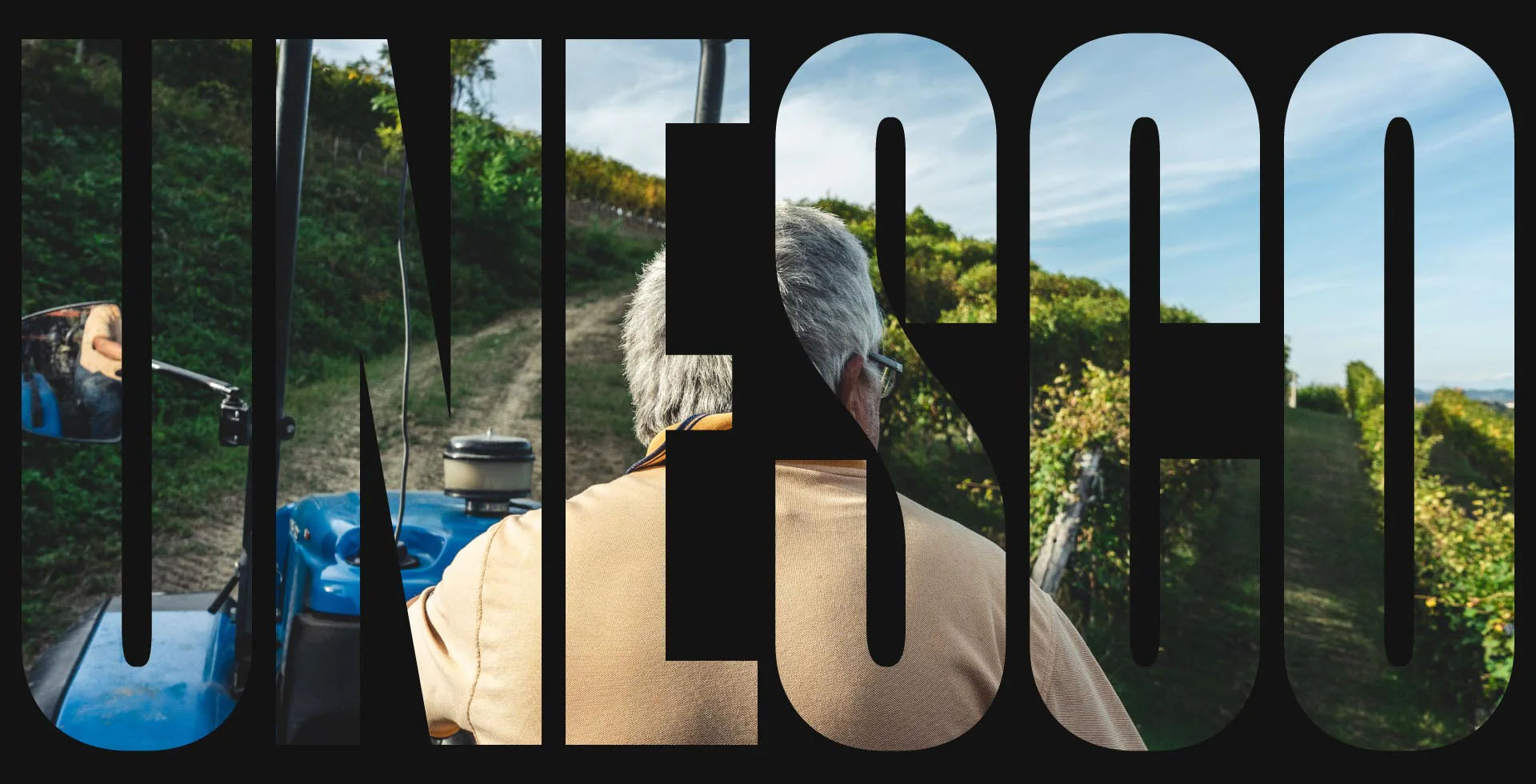
Look at the Langhe from above, from a viewpoint in La Morra or from the tower of Barbaresco, and you will understand at once. The hills look combed: the vine rows follow the contours of the land, bend, climb again, drawing geometries that change colour with the seasons. It isn't a natural landscape, nor a built one. It is the result of centuries of work between people, vines and soil.
Recognition for a landscape
In 2014 the Vineyard Landscape of Piedmont: Langhe-Roero and Monferrato was inscribed on the UNESCO World Heritage List. Not for a single monument, but for the whole: the vineyards, the farmhouses, the castles, the hilltop villages, the cellars and the infernot, the small rooms carved into the rock where the best bottles are kept.
Here the landscape is a memory: every row remembers who planted it, every slope knows which grape it wants.
The kingdom of Nebbiolo
The protagonist is Nebbiolo, a demanding grape said to take its name from the nebbia, the fog of the October harvests. From it come Barolo and Barbaresco, two wines that have carried the name of these hills around the world. Barolo is produced in eleven municipalities and requires long ageing before it reaches the glass; Barbaresco, from the hills near Alba, is often described as its more elegant sibling.
But the UNESCO hills aren't only about great reds. In the Roero, Arneis and vines on pale sands grow; in the Monferrato, Barbera and underground cellars reign; towards Canelli, the bubbles of Moscato. Every area has its character, and every character has its keepers.
Living it slowly
This is a landscape you only understand at a slow pace: on foot along the paths between the vines, by bike from one village to the next, sitting in a cellar listening to the people who make the wine. LangheMyFood experiences were born for exactly this: not to see the Langhe, but to live them, with the people who keep them alive every day.